
GPS tracking and telemetry: what is the difference
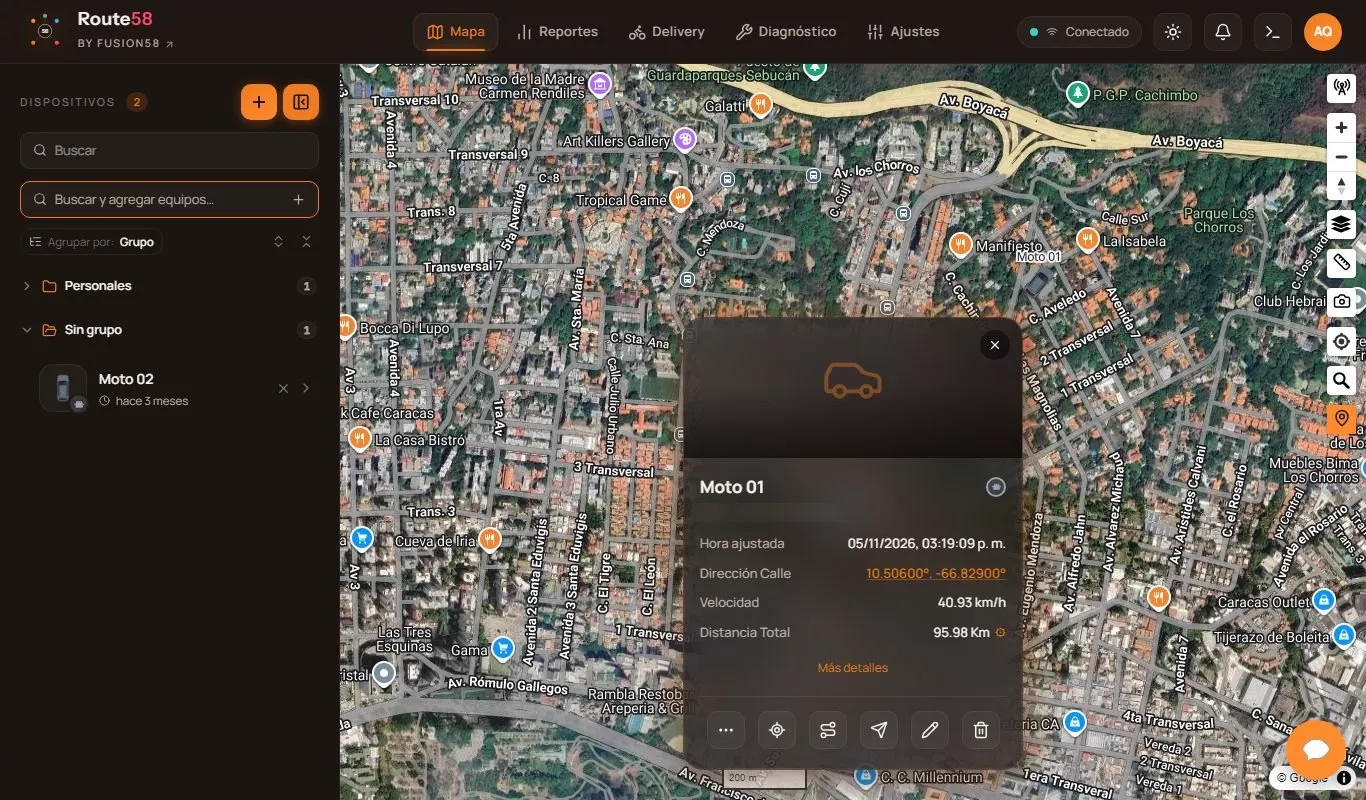
Many people use "GPS" as a synonym for "tracking", and they are not the same. Understanding the difference helps you ask for what you really need.
What GPS is
GPS (Global Positioning System) is the satellite technology used to calculate a position. Similar systems exist, such as GLONASS, Galileo and BeiDou, and modern devices often use several at once. In short: GPS answers the question "where is it?".
What tracking is
Tracking means following a vehicle, a person or an asset over time: seeing where it is now, where it was and the route it took. Tracking uses GPS to locate and a network (usually cellular) to send that position to a platform.
What telemetry is
Telemetry is measuring variables from a distance and receiving them on a platform: speed, fuel level, temperature, humidity, weight, whether a door is open, battery voltage. It answers the question "how is it and how does it behave?".
Why you want both
- Knowing a truck arrived (tracking) does not tell you whether the cargo travelled at the right temperature (telemetry).
- Knowing a motorcycle stopped for 40 minutes (tracking) makes more sense if you see whether the engine was on (telemetry).
- The most useful alerts combine both: "the vehicle left the zone with the door open".
A good project starts with the business question, not the device: which decision do you want to make with the data, and from there you choose what to measure.
Want to apply this in your operation? Tell us what you need and we reply within one business day.
Let's talk about your operation →